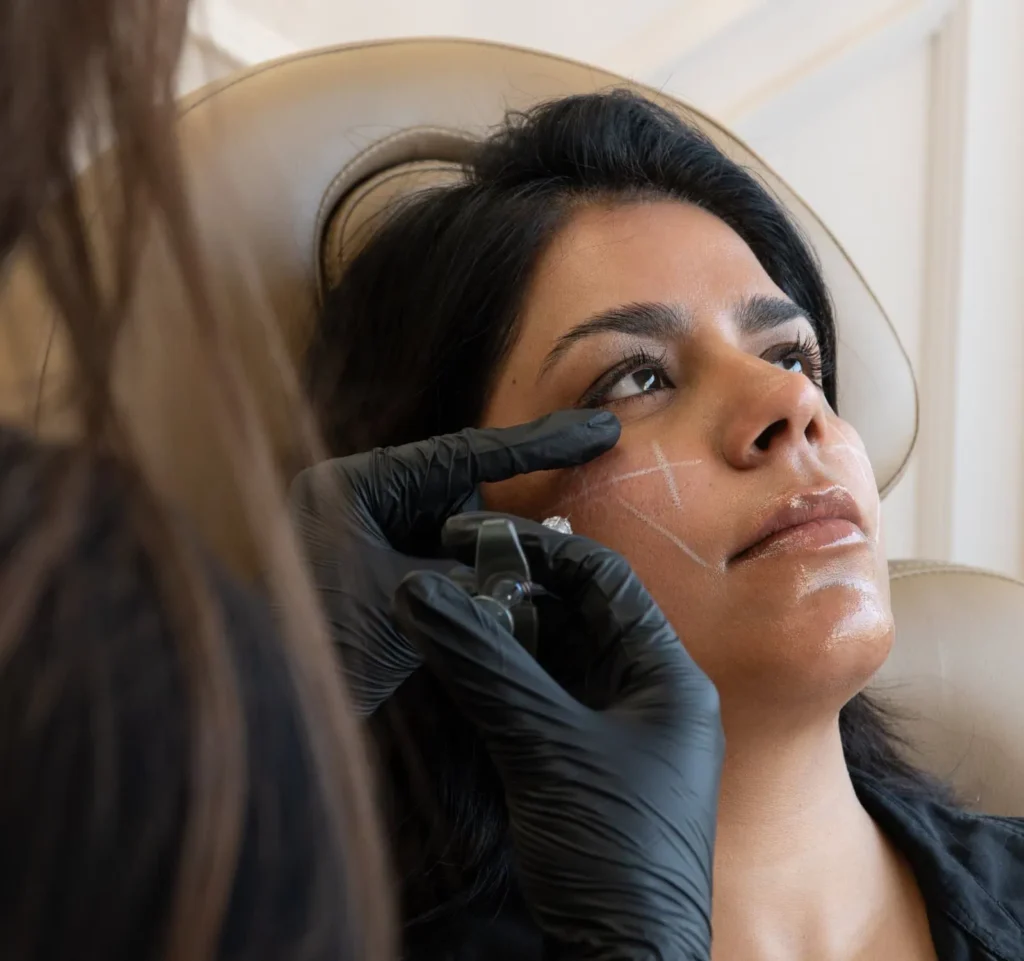
When people think about cheek fillers in Calgary, they usually imagine adding cheekbones.
But cheek filler is much more nuanced than that.
Different areas of the cheeks create completely different effects on the face.
Some filler placement is designed to restore support and softness.
Other placement is designed to create contour and structure.
This is why two people can both get “cheek filler” and leave looking completely different.
What Happens to the Midface as We Age?
One of the earliest signs of facial aging is volume loss and fat pad descent through the midface.
Over time:
- The cheeks flatten
- Fat pads shift downward
- The under eyes begin to hollow
- Nasolabial folds deepen
- The lower face starts to look heavier
Most patients don’t describe this as “volume loss.”
They usually say:
- “I look tired.”
- “My face feels heavier.”
- “Something looks off, but I can’t figure out what.”
That’s because facial aging is often less about wrinkles and more about changes in support and structure.
What Is the Difference Between Mid-Cheek and Lateral Cheek Filler?
The simplest way to think about it is this:
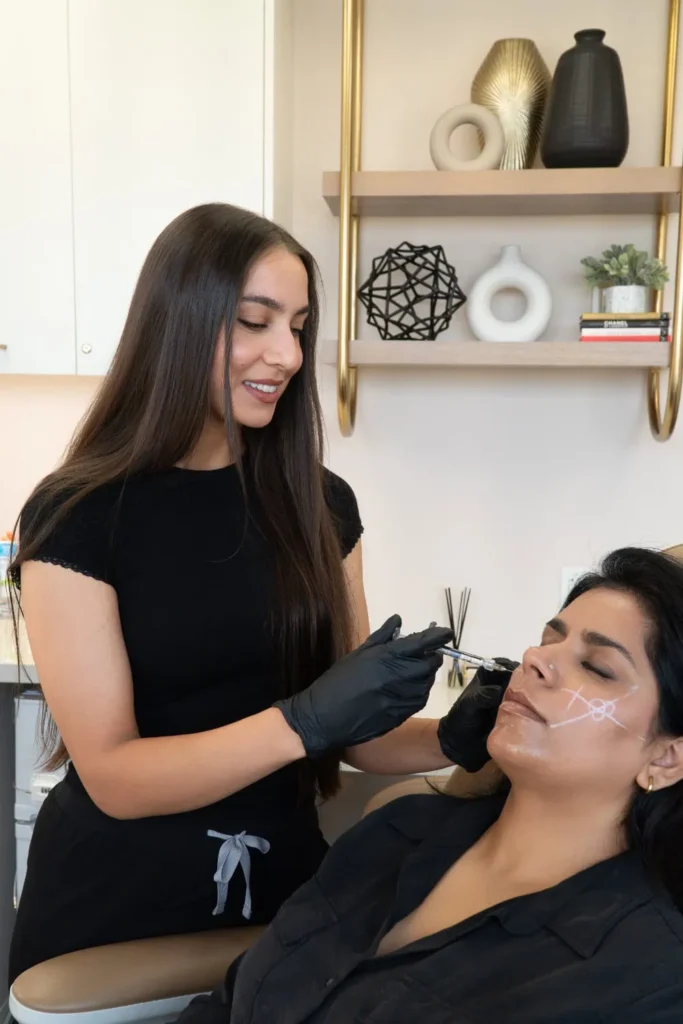
- Mid-cheek filler restores support and softness
- Lateral cheek filler creates contour and structure
Both areas lose volume over time, but they affect the face differently as they age.
What Does Mid-Cheek Filler Do?
The mid-cheek, also called the “apple of the cheek,” plays a major role in supporting the centre of the face.
As we age, the fat pads in this area gradually shift downward.
At first, the changes are subtle:
- The under eyes look heavier
- Nasolabial folds deepen
- The face looks more tired or flattened
- The lower face begins to feel heavier
This is why patients often say “I don’t know what changed. I just look tired.”
Mid face volume loss is often a big part of that conversation.
Mid-cheek filler helps:
- Restore support beneath the under eyes
- Reposition descended mid face tissue
- Reduce heaviness around the nasolabial folds
- Bring light and softness back to the center of the face
The goal is not giant cheeks.
Done properly, mid-cheek filler simply helps the face look more rested, lifted, and structurally supported.
Can Cheek Filler Help Nasolabial Folds?
Yes, but indirectly.
Nasolabial folds are often caused less by the fold itself and more by volume loss and descent higher in the face.
When the mid-cheek loses support, tissue gradually shifts downward toward the nose and mouth.
Restoring support in the cheeks can subtly reduce that heaviness without directly filling the fold itself.
Can Mid-Cheek Filler Support the Under Eyes?
Absolutely.
The under eyes and mid-cheeks function as a connected unit.
When cheek support weakens, the transition between the lower eyelid and cheek becomes more hollow or shadowed.
Strategic mid face filler can:
- Improve the cheek to under eye transition
- Reduce hollowing indirectly
- Create a softer, smoother appearance beneath the eyes
Sometimes improving the cheeks reduces the need for tear trough filler altogether.
What Does Lateral Cheek Filler Do?
Lateral cheek filler focuses more on the outer cheek and cheekbone structure.
This area provides structural support for the mid face and contributes heavily to facial shape and contour.
As lateral cheek structure weakens:
- The face can lose definition
- The cheeks may flatten outward
- Mid face tissue can drift inward and downward
Restoring support laterally often creates a subtle lifting effect across the entire mid face.
Lateral cheek filler helps:
- Define the cheekbones
- Improve facial contour
- Restore structure to the outer face
- Support sagging tissue more indirectly
- Enhance the the youthful cheek contour
This placement is usually less about “softness” and more about architecture.
Will Cheek Filler Make My Face Look Wider?
Not necessarily.
Poorly placed filler or overfilling can create unwanted width, but strategic cheek filler usually creates better structure, not bulk.
In many cases, restoring cheek support actually makes the lower face look slimmer because it reduces heaviness and improves facial balance.
Is Cheek Filler for Volume or Structure?
It depends on placement.
- Mid-cheek filler: more support and revolumization
- Lateral cheek filler: more contour and structure
Most patients benefit from a combination tailored to their anatomy, facial proportions, and aging pattern.
What Fillers Are Used for Cheeks?
Common cheek fillers include:
- Juvederm Voluma
- Restylane Lyft
- Teosyal RHA 4 or Ultra Deep
- Revanesse Contour or Shape
- Radiesse
- Hyperdilute Radiesse for collagen stimulation and broader volume restoration
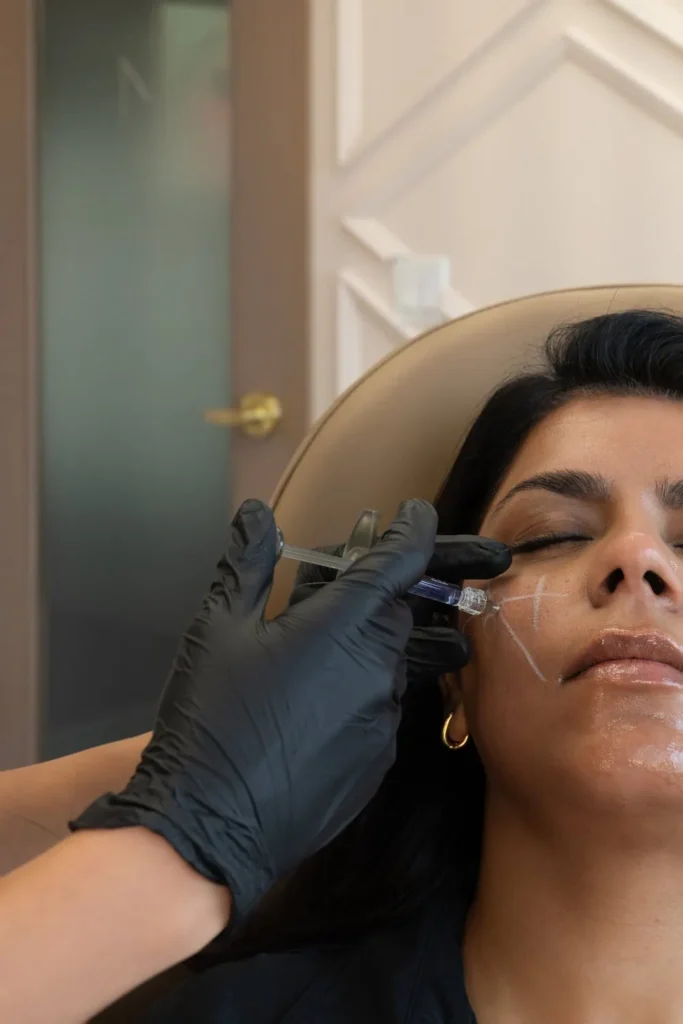
The right product depends on whether we’re prioritizing:
- Lift
- Structure
- Softness
- Collagen stimulation
- Longevity
How Long Does Cheek Filler Last?
Most cheek filler lasts approximately 12–24 months depending on:
- Product used
- Placement
- Amount injected
Hyperdilute Radiesse results appear immediately and continue to develop gradually but can last even longer because the volume comes from your own collagen production.
The Nuances of Cheek Filler
Cheek filler is not just about adding volume.
Different areas of the cheek change the face in completely different ways.
Mid-cheek filler restores support, softness, and facial balance. Lateral cheek filler creates structure, contour, and lift.
The best results happen when filler is used strategically, not simply to make cheeks bigger, but to support the face as a whole.